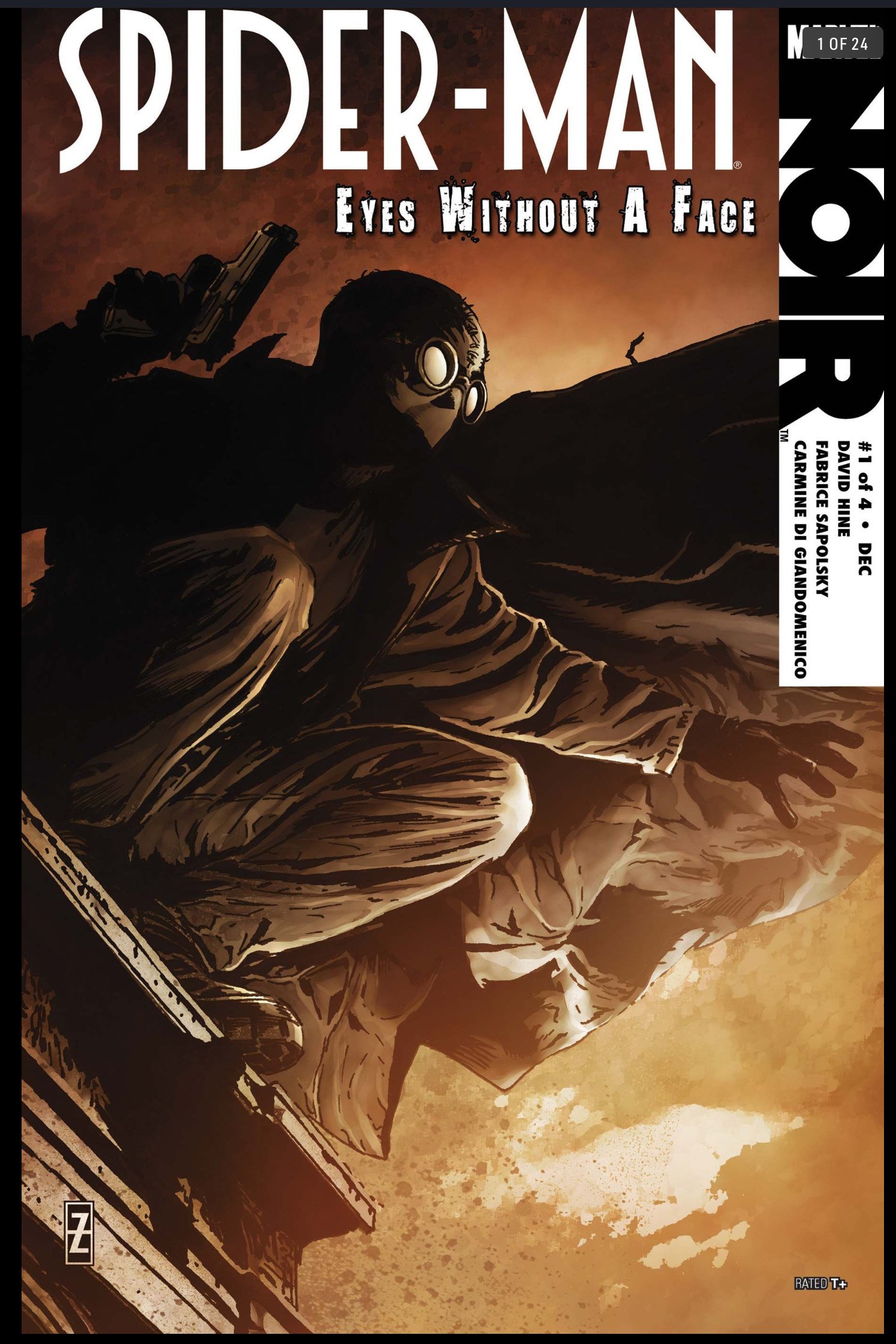
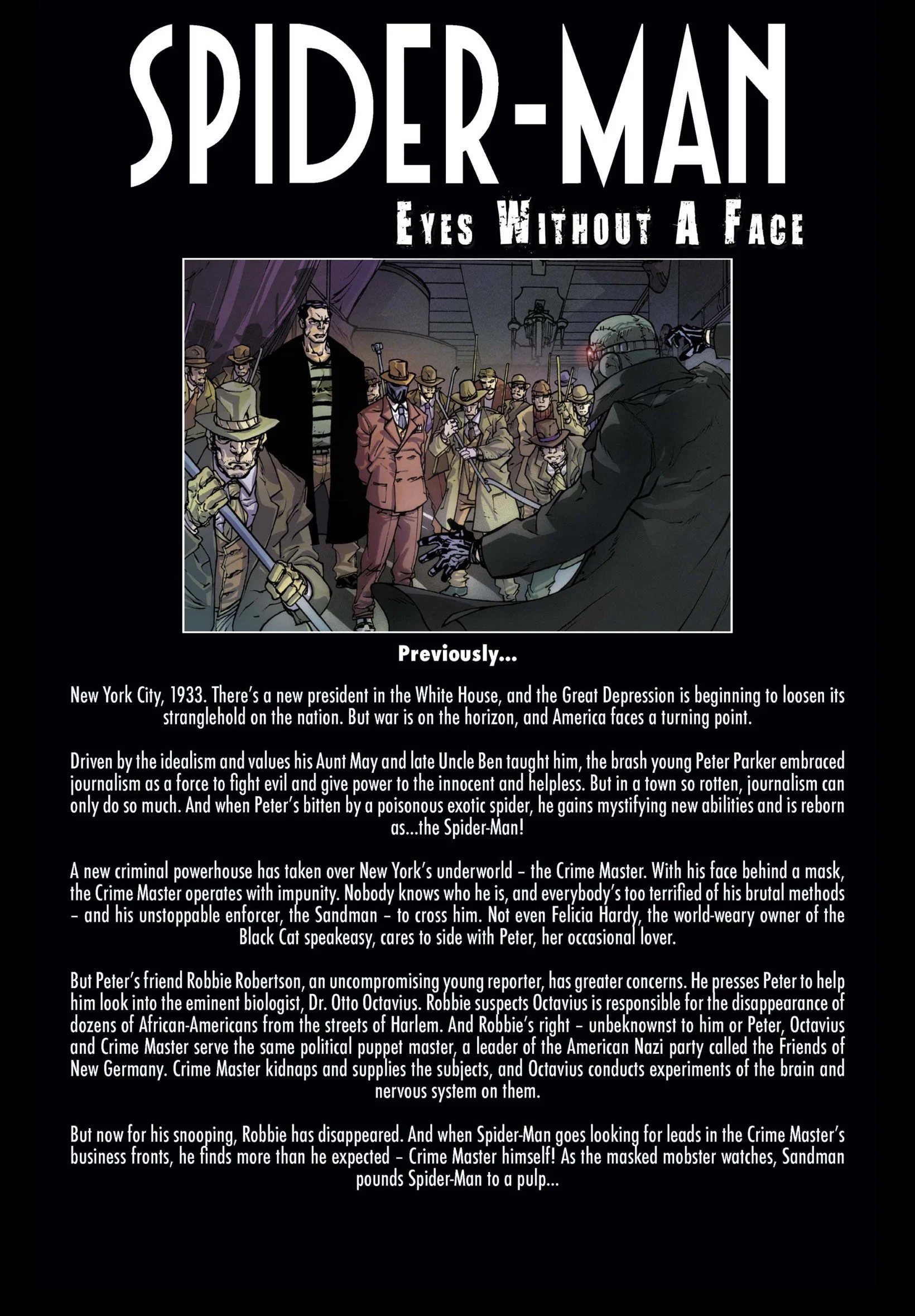
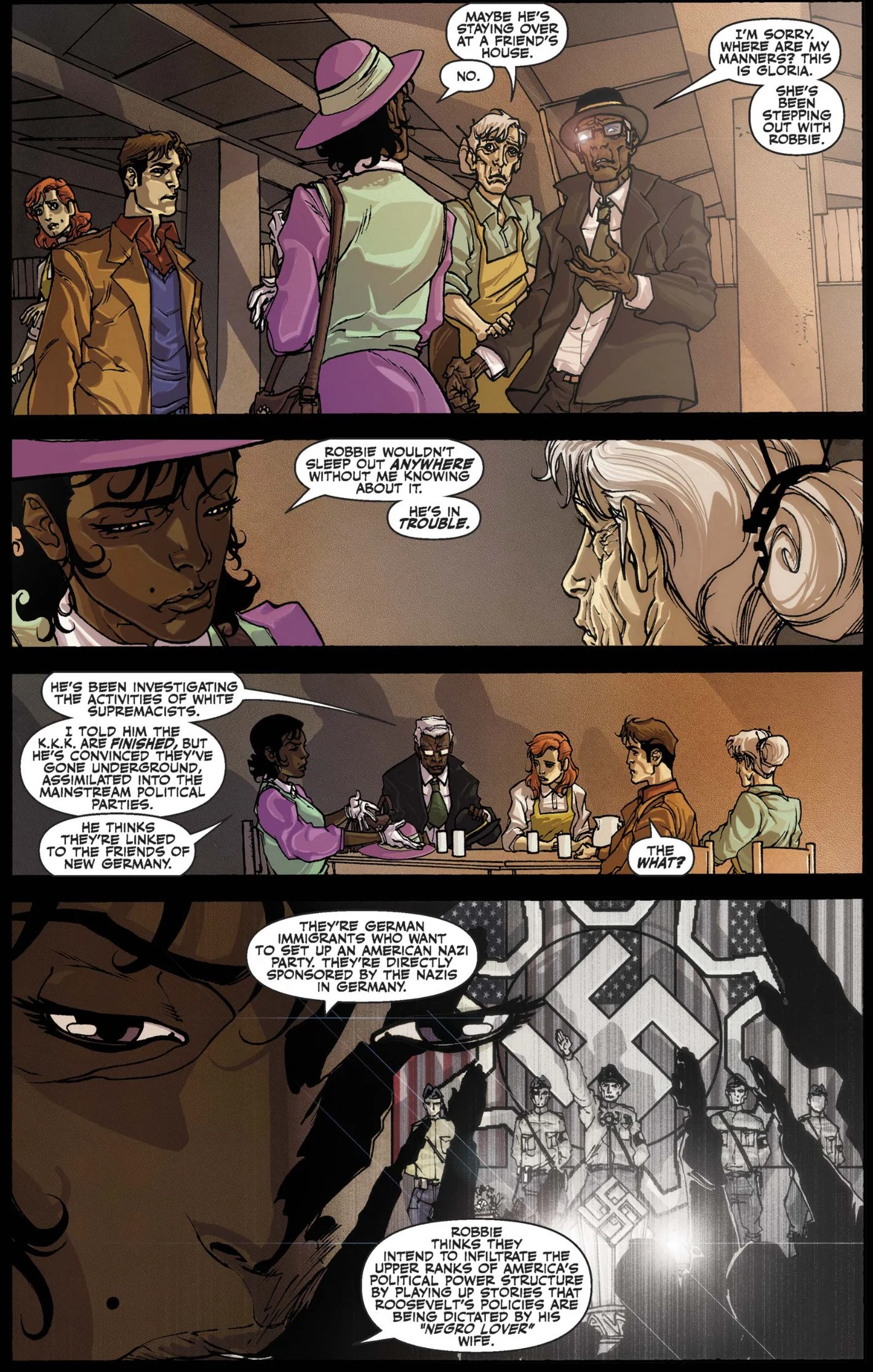
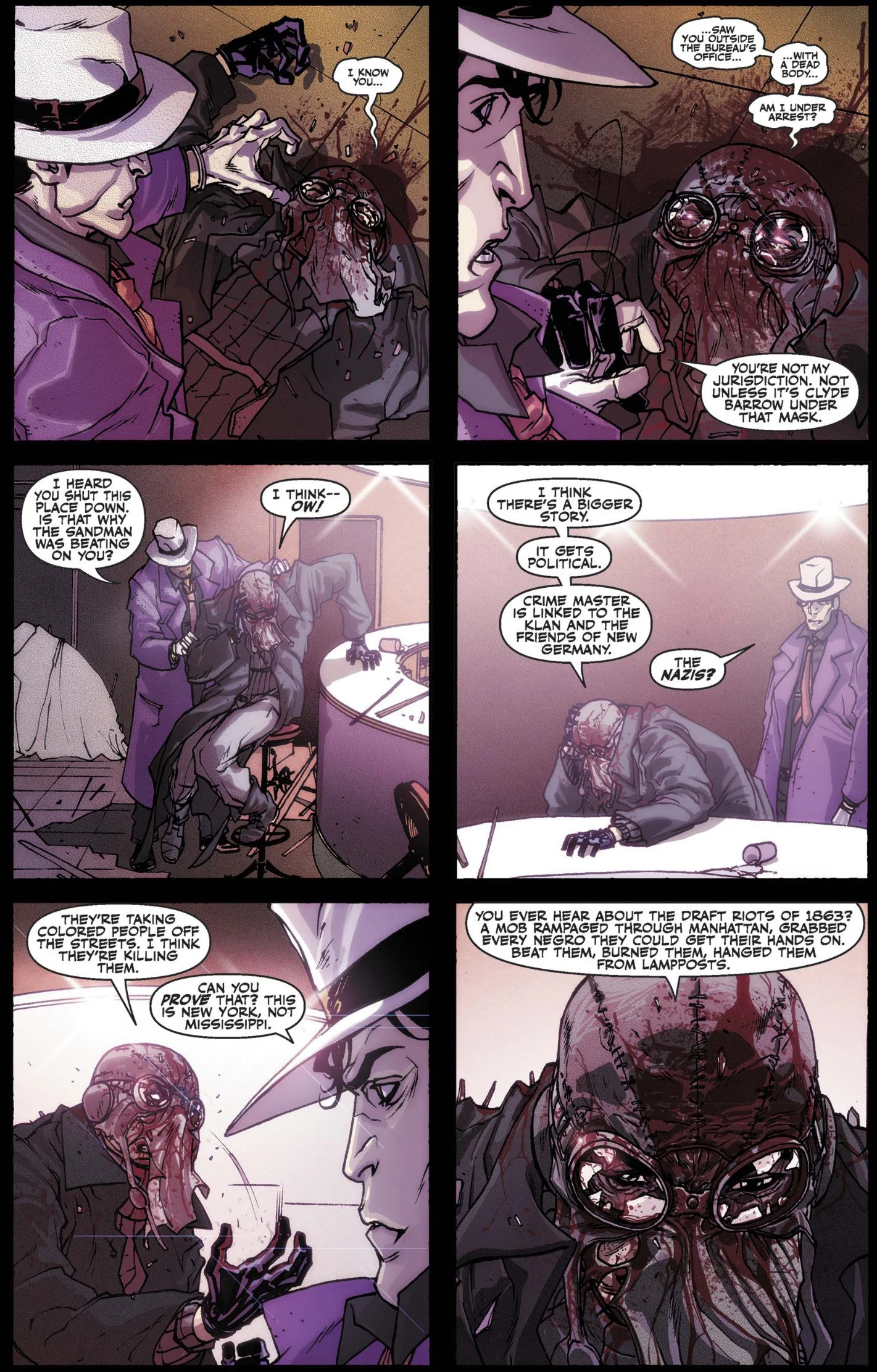
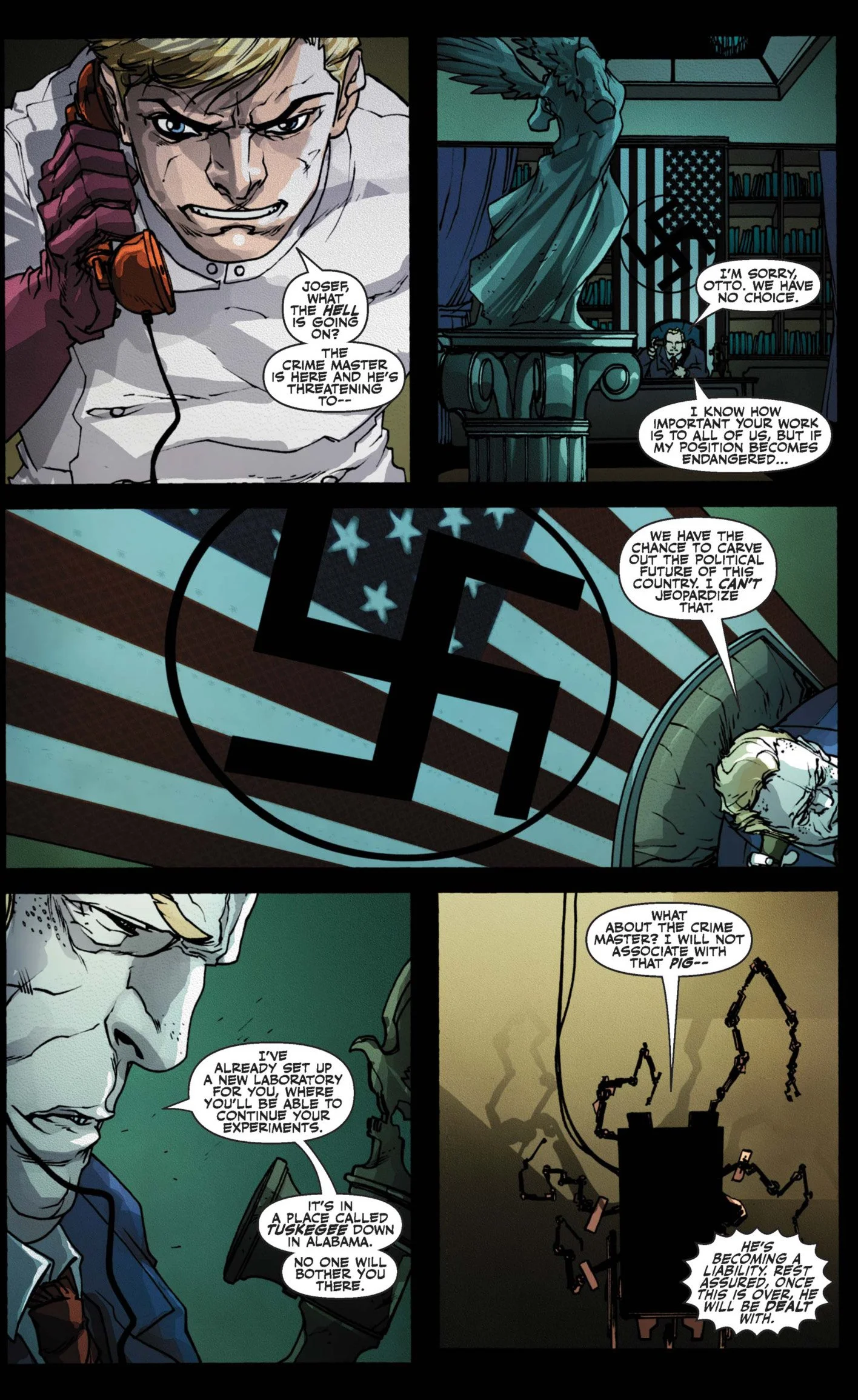
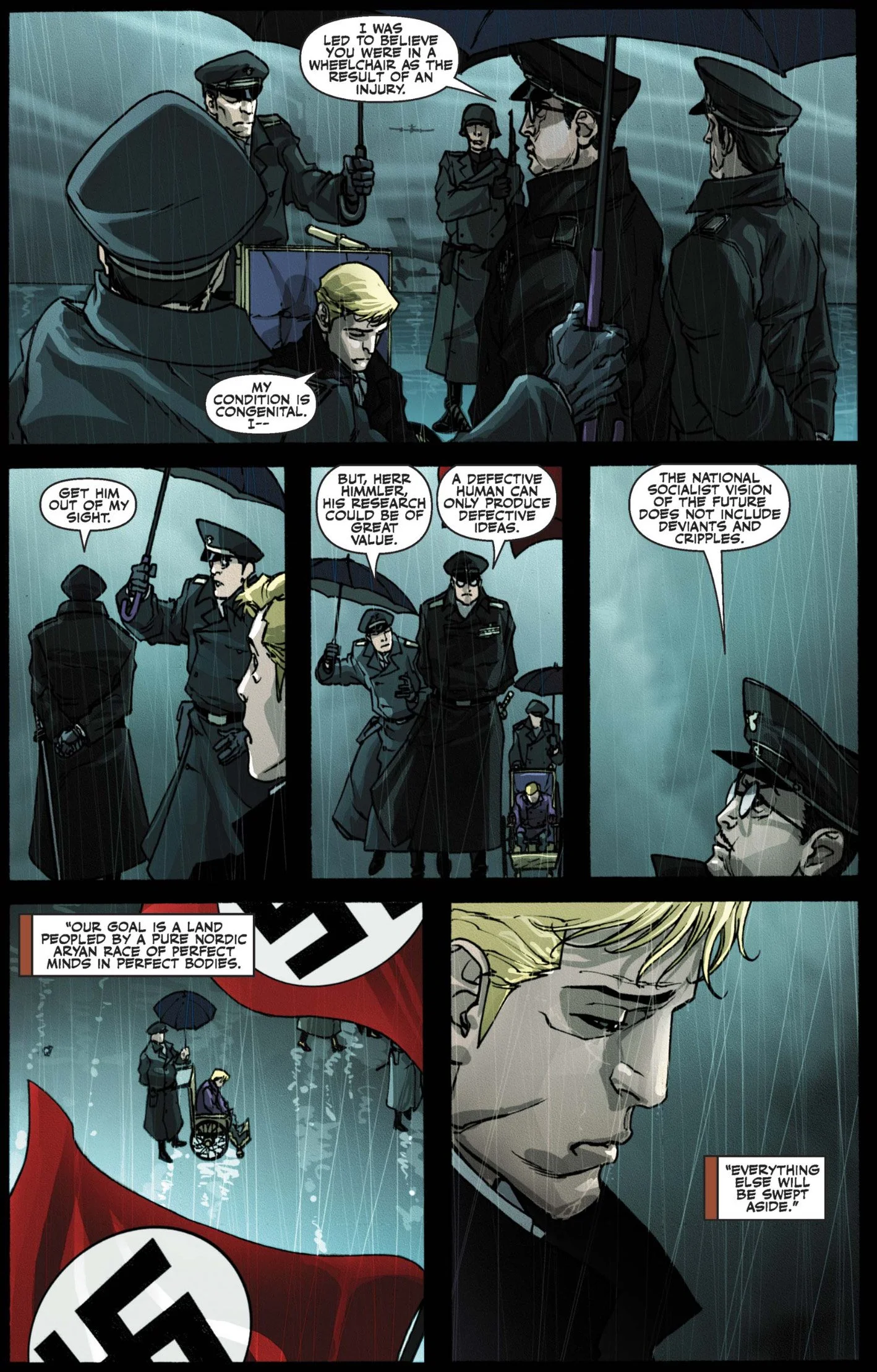
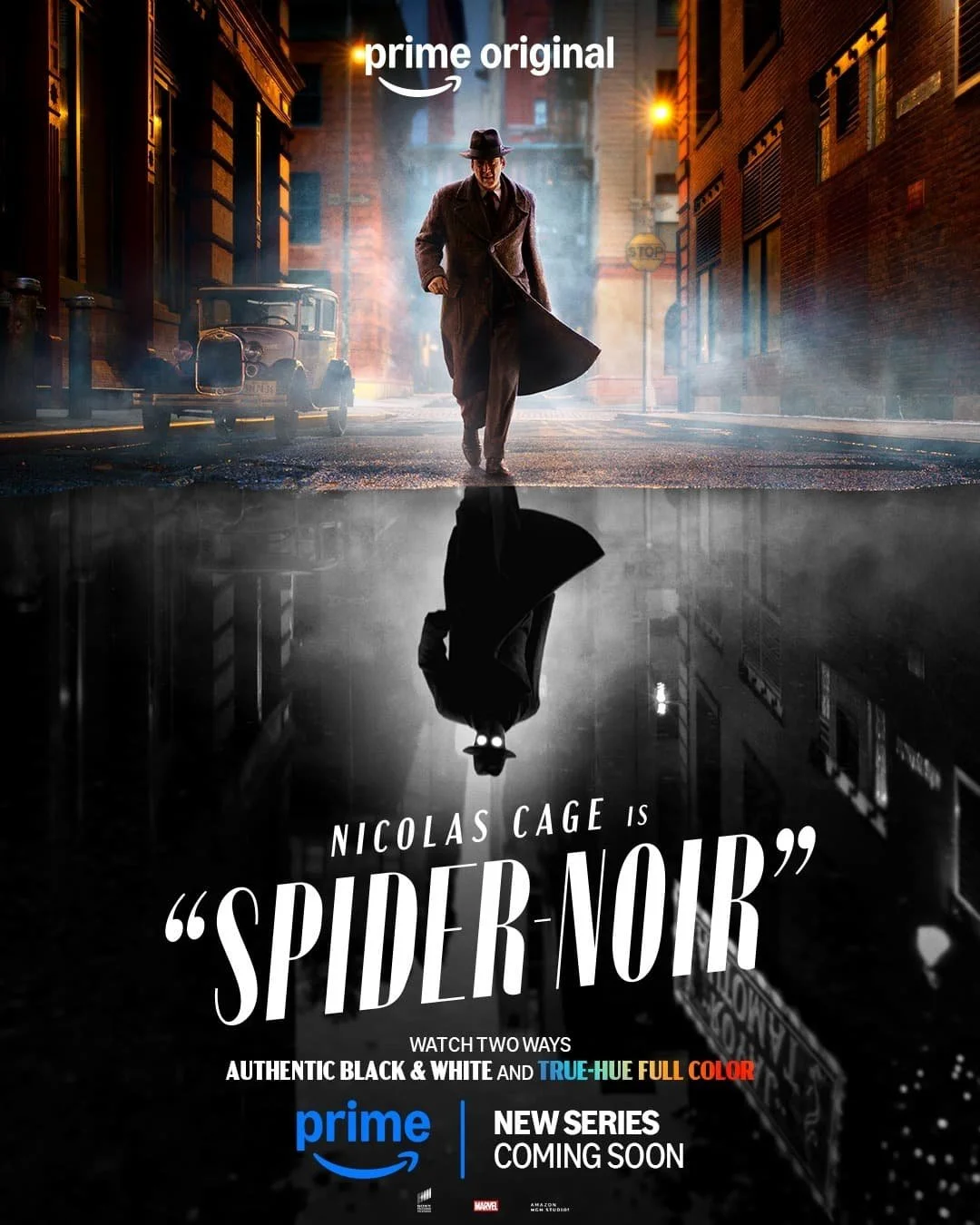
2026 Update - in May 2026, Amazon Prime is releasing a live-action series starring Nicholas Cage. The series will be available to watch in either black and white or color…. I will be watching in black and white. This will be a powerful way to conduct text to text to text analysis between screen and comic. Students are excitdely anticipating the Amazon series - a great way to have them read is to introduce them to the original comics material! Have students read the below interview with David Hine and understand the history that went into this comic.
I just read Spider-Man Noir, the Complete Collection (2019) written by David Hine, Fabrice Sapolsky, and Roger Stern, with stunning art by Carminie Di Giandomenico, Richard Isanove, Bob McLeod, and Paco Diaz. (ISBN 9781302919580). I first found interest in the character after watching the unequaled movie Spider-Man: Into the Spider-Verse. To be honest, it was my 11 year-old son who begged me to buy the book as he wanted to learn more about the character in the story. (This is a perfect way to engage students in reading – buy the book that goes with the movie, TV show, or video game). As a history teacher who has found a lot of success integrating comics as educational resources, I was immediately drawn into the history woven throughout the comic. The Great Depression is the backdrop to the compelling story line and I found myself reading it with sticky notes and lesson plans forming in my head. It is stories like this that will immediately pull our students into history by engaging their imagination and thoughts of “what if” surrounded by well-researched historical events. I was so excited when David Hine responded to my message and agreed to be interviewed here. I will first post the interview, and then my lesson plan ideas will follow.
1. Dave, thank you so much for agreeing to answer some questions about Spider-Man Noir – the implications for its inclusion into the classroom is astounding. First, some info about you – could you give us some background on the work you have done in comics?
DAVE: I’ve been working professionally in comics since the early 1980s, beginning with British comics. Some of my earliest work was as an artist for Marvel’s UK office, which published new material distinct from Marvel’s American comics. I moved on to write and draw for the science-fiction weekly 2000AD, and finally wrote and drew my own series called Strange Embrace, which was later published in the USA as a graphic novel. That led to Marvel offering me work as a writer on some of their key characters including X-Men and Daredevil and from there I went on to write for DC comics, Spawn and a number of creator-owned independent comics in the USA and the UK.
2. Why comics? What brought you to want to be involved in the comics industry?
DAVE: From a very early age I knew I wanted to be a writer. I wrote my first (very short) science-fiction novel when I was eight. I had always read British comics but it was when I saw the imported Marvel comics like Spider-Man, Thor and Fantastic Four, that I realized I wanted to put words and images together to tell my stories. I was probably thirteen when I settled on creating comics as my goal in life. There’s something about the combination of words and pictures that is unique and satisfying to a storyteller. It’s also a lot cheaper than making movies! The whole community of comics has always been very welcoming and supportive too, both among the fans and professionals.
3. What are your thoughts on using comics in the classroom?
DAVE: Comics are a great entry point to reading. Working with young people I can see how using comics breaks through a lot of resistance that they sometimes have to reading a lot of text on a page. We all first learned to read with simple picture books and comics are a major step up from there. They are both a gateway to reading novels and textbooks, and also a valid art form of their own. We are living in such a visual world that young people automatically handle that simultaneous input of words and images. It’s natural to combine the two as a kind of hybrid language that communicates directly and dynamically.
4. In your message to me, you said that you are currently a mentor to school and university students in making comics at Pop Up Projects (pop-up.org.uk). You said, “It’s all about getting young people to see that they can make art and literature on their own.” This sentence really resonated with me and I couldn’t agree more!
I also looked up Pop Up Projects and found this quote on their About Us page –
“About Us – “Pop Up Projects are a not-for-profit Community Interest Company, established in 2011. Since 2015 we have been an Arts Council England National Portfolio Organisation – NPOs represent “some of the best arts practice in the world, and play a vital role in helping meet the Arts Council’s mission. We firmly believe that access for all children and families to the broadest range of published, live and digital literature is a universal right. In all our work we facilitate access to rich and meaningful literary experiences for children and young people, schools (primary, secondary, SEN) and families – especially in diverse, deprived, isolated and otherwise challenged communities.” Wow!!!!! Can you please expand a bit on the organization and what you are doing?
DAVE: This is my first project with PopUp and in my case I am one of three comics creators, going into a school in Eastwood, where DH Lawrence was born, to encourage students from the Secondary school and from the University of Nottingham, to create their own comics based on Lawrence’s writing. The idea is to explore his work in relation to their personal experience and to the history of the area. For most of them it’s a first taste of making comics and it’s great to see them getting excited by the stories unfolding on the page as they work. This project is also linked with UNESCO, as Nottingham is a UNESCO City of Culture, and we have funding for the finished comics to be printed by a leading British graphic novel publisher, SelfMadeHero.
PopUp are very much focused on schools in deprived areas. These kinds of activities tend to be more available to wealthier families, particularly in London and other more affluent areas. We want to show these young people that everyone can make art, both as a hobby and as a career. I grew up in a working class home where the assumption was always that the creative jobs were not available to us. Even my own parents couldn’t accept that art was a viable career and I had to fight to go to Art College instead of getting a ‘proper job’. In a world of shrinking job opportunities the arts are going to be ever more important as a part of people’s lives. It’s vital that everyone has equal access to making and enjoying the arts, irrespective of background or income.
5. Why did you decide to write this particular story-line centering on Spider-Man and the Great Depression? What was the inspiration?
DAVE: My co-creator, Fabrice Sapolsky, first came up with the idea of doing a ‘pulp’ version of the character, set in the 1930s and we pitched the series to Marvel Comics as an alternative version of Spider-Man with a Film Noir feel to it. It made sense to set it in the Prohibition era, which is also the period when the traditional movie-style gangsters flourished. I started reading up on American history for the period. I’m English so my knowledge of the 20th Century history of the USA is sketchy to say the least. What I read of the politics and social background of the period was fascinating. I read up on the Great Depression and the horror of the shantytowns, known as Hoovervilles after President Hoover, where the unemployed lived in appalling conditions. It also made sense to reinvent Peter Parker’s family as socialists. Even in the early version of Spider-Man that I read in the 1960s, Peter Parker and Aunt May were portrayed as underdogs, always struggling against poverty. Once we decided on the setting all the other details fell into place as I read up on the social history of the Depression and its impact on working class people, who often ended up without jobs and no safety net to protect them.
6. As a social studies teacher, I was impressed with the amount of historical connections during the Great Depression, in addition to the compelling fictional story-line. Please describe for us the process you undertook to research for the book. Did you interview anyone, visit the library, rely on a specific source or two? What were some of the most difficult parts of the process?
DAVE: I have a terrible habit of underlining passages and making notes in margins, so I tend to buy books in preference to using the library. I bought William E. Leuchtenburg’s Franklin D. Roosevelt & The New Deal, Robert S. McElvaine’s The Great Depression, and Public Enemies by Bryan Burroughs for background on gangsters and the early days of the FBI. General history books were good for checking events against dates and then the good old internet filled in the gaps. We tried to be very careful not to make any factual errors. We initially thought about having the black journalist Robbie Robertson working for The Daily Bugle but my research made that look highly unlikely. There simply weren’t any African American journalists working on the mainstream newspapers. So we had him working for The Negro World, a leading African American newspaper that ran from the late 19th Century until 1940.
I also turned up a lot of very disturbing facts about The Friends of New Germany, the American version of the Nazi Party. And of course the idea we explored in the second series, Spider-Man Noir: Eyes Without a Face, of medical experiments on African Americans, though fictional, has resonance with the Tuskegee Study of Untreated Syphilis in The African American, where treatment was deliberately withheld from hundreds of black men with syphilis over a period of forty years. We really didn’t need to exaggerate much.
I dropped in as many references as possible to real world elements. The villainous Dr Otto Octavius quotes Rudolf Kjellén, the Swedish political scientist who came up with a lot of the ideas about Geopolitics that Hitler later espoused. On the other hand there are a few fictional elements. We have Spider-Man Noir raiding a club called Seventh Heaven in Harlem. It never existed, but we do drop a mention of the Cotton Club, The Savoy and the Radium – all real Harlem locales.
Basically you can take most of the references and use them as springboards for research into the period, though we tried not to make it too heavy-handed. The language is pretty authentic too. I collect dictionaries of slang so they came in very useful.
7. What was it like working with the artists and getting the illustrations to match the historical events? How involved were you in the process?
DAVE: I did a lot of picture research as well. I usually supply photo reference to artists I work with, particularly if it’s a specific period or location. With a big publisher like Marvel you don’t really communicate directly with the artist. Everything goes through the editor and assistant editors and there can be occasional failures of communication. In an early scene in the first series, May Parker is giving a political speech in a location that is specifically the Riverside squatters’ shantytown in NYC. The buildings in the drawings were a little too solid and sophisticated compared to the ramshackle reality. In the original artwork they even had electric lights, which I asked to have removed. I’m a bit pedantic at times.
There was one error that stood out for me like a sore thumb. In Eyes Without a Face, there’s a scene where Felicia seduces Peter Parker and she was drawn naked under her robe. Only a back view but I was told that it had to be censored because the drawing made it clear that Peter could see everything even if the reader couldn’t. This was a decision made late in the day and underwear was added. Unfortunately the skimpy underwear was more Victoria’s Secret than 1930s lingerie. I didn’t see that until the comic was printed so it was too late for me to gripe about it.
Otherwise I think we were all good. Carmine Di Giandomenico is a great artist and has a lot of experience drawing period comics. His vehicles, costumes, buildings and interiors were all spot on.
8. What is your favorite part of the book?
DAVE: I really enjoyed the Aunt May character. She is totally fearless and her principles are unshakable. When one of the Goblin’s gangster enforcers tries to stop her making her socialist speeches, she faces him down with the line “Young man, the last time I looked, the constitution of this country protected my right to freedom of speech.” Later, Spider-Man Noir saves her life by shooting the Vulture. Instead of thanking him, she yells at him for using a gun.
9. What, if anything, would you have done differently if given the chance? Add any characters? Were there parts that were left out?
DAVE: That gun would probably go. Marvel wanted him to have a gun. I guess it was justifiable for the period and context but we should probably have used Fabrice’s idea of non-lethal ammunition – smoke pellets, mild electric shocks, maybe something like that.
The way we ended up handling it, he carries his Uncle Ben’s service revolver and, after Aunt May tells him off for killing the Vulture, we rarely see Spider-Man with a gun again, except when he takes weapons off the gangsters at the Harlem night club and fires them into the air. They still feature a lot on cover images though, and one of the action figures that have gone on sale, has him with a gun in each hand.
We went through a few changes as plots were discussed but I’m pretty happy with how the stories turned out. I think Fabrice wanted to include a lot more of the cast of characters from the Spider-Man universe and give them that 30s twist. We also had ideas for carrying the character forward and maybe age him realistically so that we see him reacting to the social changes that came about in the 1940s and 50s.
10. Do you have any advice for teachers in using this book?
Dave: The kinds of things you have talked about seem perfect for history lessons. Get the students to look through the comics for references to specific events, characters and political issues. Then encourage them to research those things, to expand on them and see how the issues relate to the present day. Depending on how controversial you want your discussions to get (and I do have a tendency to raise controversial issues), I could see explorations of extreme politics, gun control and racism at the very least.
Regarding Franklin Roosevelt and the Democrats in the early 1930s, I found it interesting to read that, at the time, the Republicans were seen as the party of racial equality, while Roosevelt was held back from working towards full integration by Southern Democrats. The role of Eleanor Roosevelt was very important in speaking for civil rights for African Americans, something I refer to briefly, but my knowledge is very patchy. I feel like I need to take a few lessons in 20th Century American history myself.
11. What new projects are you working on?
Dave: Sonata is the first of a series of projects I’m working on with artist and co-writer, Brian Haberlin. The second will be announced very soon. Those are both being published through Image comics. In the UK I have recently published a graphic novel called Lip Hook with art by Mark Stafford. We have another one called The Bad, Bad Place out later this year. Then there’s work for the Judge Dredd Megazine, the companion title to 2000AD here in the UK. I have just finished a series featuring Judge Death, with artist Nick Percival and waiting on the green light for another series.
Dave, thank you so much for your time and amazing stories! Below are some initial thoughts I had while reading Spider-Man Noir and how it can be used in the classroom:
DAVE: I read through the list below and I’m very impressed. You picked up on so much! I’m glad my research is pretty solid. I would feel like an idiot if I had made errors. By the way, the use of troops against demonstrators in 1932 was doubly ironic as they were used to clear the campsites of the ‘Bonus Army’ of 20,000 WW1 unemployed veterans who were gathered in Washington to demand the compensation promised to them for lost earnings during that war.
SOME INITIAL REACTIONS/THOUGHTS TO CONVERSATIONS THAT CAN BE OPENED IN THE CLASSROOM AFTER READING THE COMIC….
*What is the actual power of the press? Can photographs of events change governmental policy or get people to care? What pictures were taken by journalists during the Great Depression? If I was a journalist, what would I want to take pictures of? What would have the greatest impact on helping those suffering during the Great Depression? Then I would have my students research journalists throughout history – what have been the pictures with the most impact? Who are the journalists behind the photos?
*”Three years ago, Hoover was telling you your jobs were secure for life. Since then, more than thirteen million of you are out of work! We’ve seen the army on the streets, using tanks and tear gas against citizens whose only crime is their poverty!” – May Parker. Such a loaded bit of dialogue that can lead to much research. Who was Hoover? What was his role in the Depression? Did the government send in troops/police against those who were impoverished? Why? How?
*”Now we’ve got mister Franklin D. Roosevelt waiting to step into Hoover’s shoes, but you think there’s going to be any real change? Republicans. Democrats. The only thing they’re debating is the most efficient way to turn your sweat and blood into profit.” – May Parker. This would the perfect chance to ask students about their prior knowledge of FDR and the New Deal. Did it work?
*”So you want to join the Fourth Estate?” – J. Jonah Jameson. What is the 4th estate? What role does it play in history?
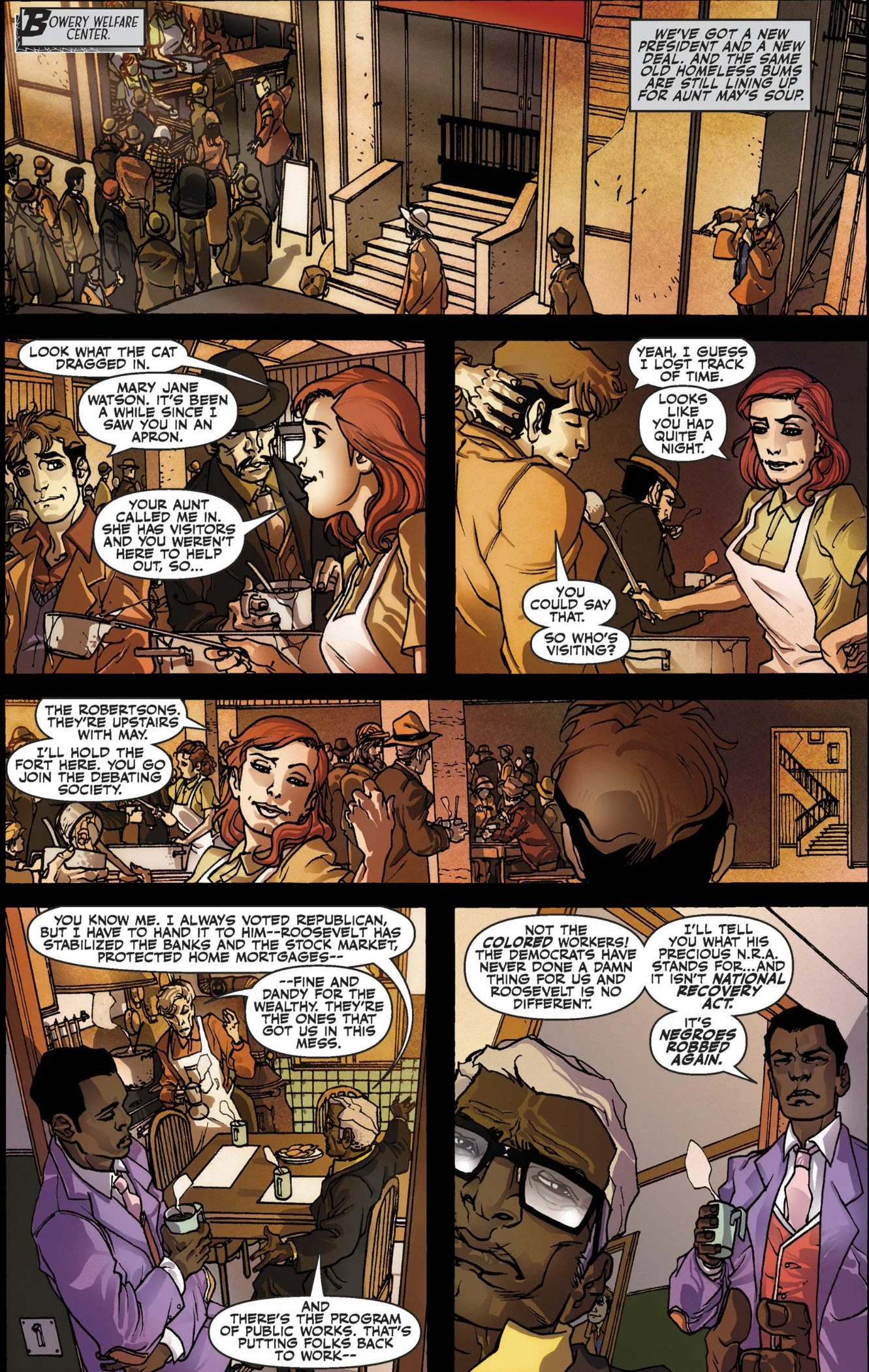
“We’ve got a new President and a New Deal. And the same bums are still lining up for Aunt May’s soup.” – people lined up at the “Bowery Welfare Center” – there is a Bowery Mission in NY since the 1870s – are they the same? Evaluate the New Deal. When did it begin to make an impact? How long did the Great Depression last? (students are often surprised that is wasn’t just a year or two).
“Not the colored workers! The Democrats have never done a damn thing for us and Roosevelt is no different! I’ll tell you what his precious N.R.A. stands for… and it isn’t National Recovery Act. It’s Negroes Robbed Again!” – research the N.R.A. – did it work? Why did “Negroes” feel left out? How did the New Deal impact minorities?
“…even with lynchings back up to two a month, Roosevelt has refused to back an anti-lynching bill because he won’t risk losing the support of the Senate on more important issues.” – what was happening to African-Americans during this time period? How did FDR react? Did he do anything?
“So how is it at Negro World?” – what Black papers were in circulation at the time? What was published?
*At Ellis Island – “It’s hard to believe that millions of immigrants were processed through here. My Great-Grandparents must have stepped off the boat right on this spot.” “Not mine. I’ll venture that my ancestors were a little less optimistic about their prospects than yours when they set foot on American soil.” – Why would an African-American say this at Ellis Island?
*”The flow goes the other way these days. That’s the deportation holding center over there. Last stop for all the undesirables who don’t fit the picture of the perfect American citizen. Criminals, subversives, communists, anarchists…” – was Ellis Island used to also deport people? Why would these types of people be deported? What is the history of Ellis Island?
*Doctor Octopus, and others, are experimenting on African-Americans on the island. So many connections to the Tuskegee Experiments, Nazi experiments, eugenics, and even philosophical debates on medical research. Certainly not an easy topic, but one of such vital importance to our shared history and ties to current events.
*Role of Nazis in the United States before WWII. Discuss Nazi rallies, Madison Square Garden, etc.
*Rudolf Kjellen and biopolitics. Who should be eliminated to endure the survival of the state? Bioethics…
*Connections to apartheid and South Africa
*So much going on in the art – such as fashion. Zoot Suits – research Zoot Suit Riots and the pop song.
*Role of J. Edgar Hoover
*Prohibition, Al Capone, John Dilinger…
*Just the idea of having so many different Spider people in the Multiverse. Students can create their own Spider hero in a time period not already written about in comics….
These are just some of the ideas currently swimming through my head as I revamp my Great Depression unit for next year. I don’t want to give too much away, but having the Goblin next to Capone, Doc Octopus with Himmler… wow!
Dave also emailed to let me know about his thoughts on research in writing Daredevil - “I had a similar response to an old Daredevil story I did (Daredevil:Redemption) which was a story based on DD's life as lawyer Matt Murdock. I spent 5 weeks researching the legal details for one episode and I had my doubts over whether I was wasting my time. Then recently I heard from a lawyer who wrote an article for the Law Review on Daredevil comics that were accurate representations of the legal system. He picked up on all the details I had researched. It really does make it worthwhile.” I just ordered a copy from my local comics shop! Can’t wait to read!
Thank you for reading this interview and be sure to check out the work of David Hine - especially his new stunning new series Sonata, published by Image Comics. Hine has once again written a comic with many uses in the classroom - geopolitics, scarcity, ethnic conflict, imperialism, race for technology, strong female lead… it’s like taking a long hard look in the mirror of our humanity…